Marsa Alam, Egypt is the quiet end of the Red Sea, and it is not for everyone
Marsa Alam, Egypt is the quiet end of the Red Sea, and it is not for everyone
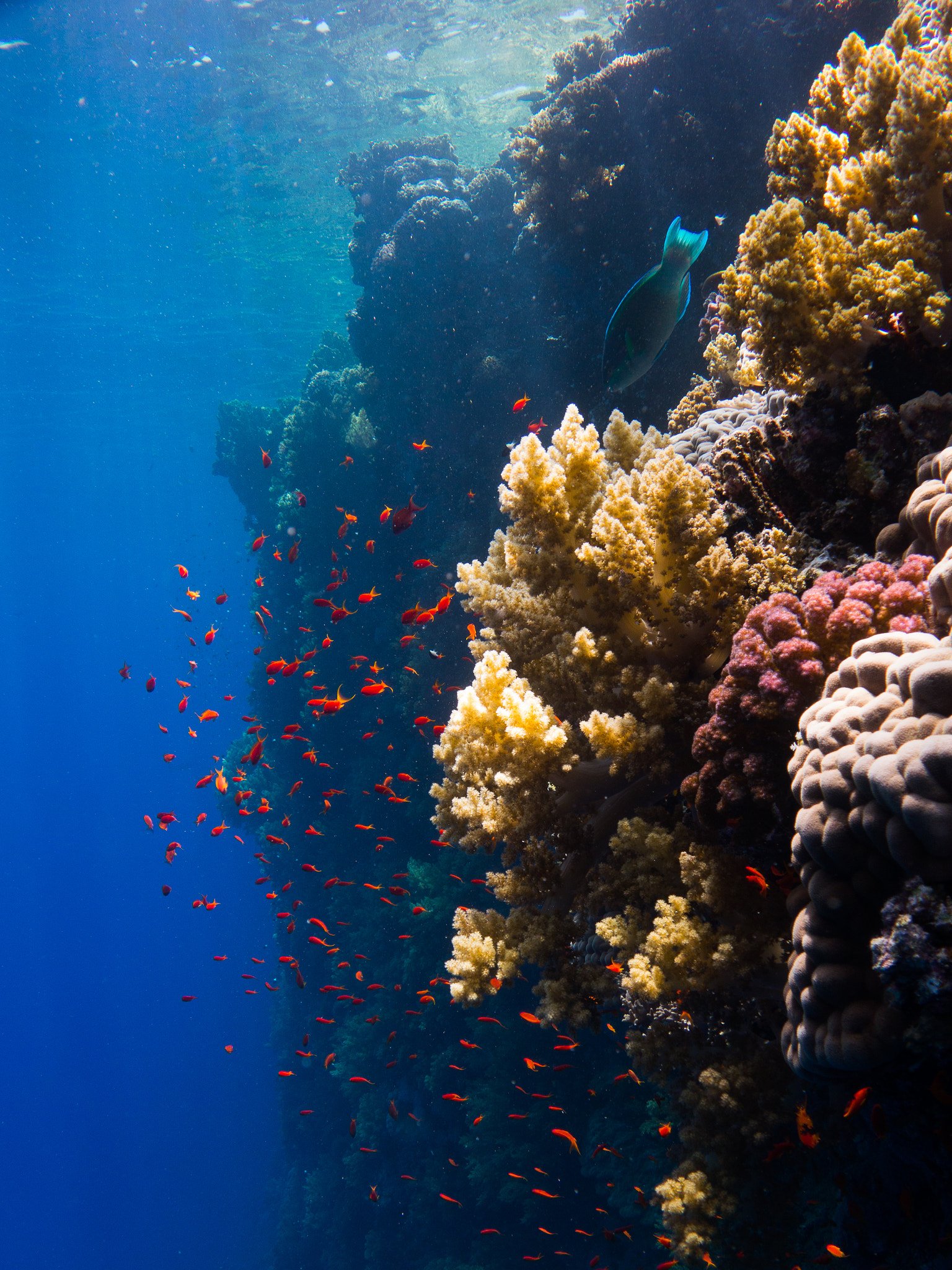
Marsa Alam is the southern stretch of Egypt's Red Sea coast, a long ribbon of bays, resorts and desert south of Port Ghalib, and it is the place you choose when the sea itself is the point of the trip. The reefs are healthier than anything north of Hurghada, you snorkel over green turtles and sometimes a dugong at Abu Dabbab straight from the sand, swim with wild dolphins at Sataya and Samadai, and dive walls like Elphinstone that serious divers cross oceans for. What it lacks is a town to stroll, nightlife or shopping. Below: who it suits, the drive from Luxor or Aswan, the best months, and how we build it into a Nile trip.
Where Marsa Alam is, and what it actually looks like
Follow the Red Sea coast south from Hurghada past Safaga and El Quseir, and about three and a half hours later you reach a small marina village called Port Ghalib next to an airport. That airport is what most people mean by Marsa Alam. The town itself is forty minutes further south, a working village with a fuel station, cafes and a fishing harbor.
The resorts are strung along roughly 120 miles (200 km) of coast, each alone on its own bay with desert behind and nothing walkable on either side. That one fact shapes the whole trip: your hotel is your base, your restaurant and your dive center. There is no boardwalk, no strip of bars and no market street, and the visitors who expected one are the ones who leave disappointed.
Port Ghalib is the exception: a curved marina waterfront of restaurants, cafes and a few shops, small and quiet by Hurghada standards but the only spot on this coast that feels like a town after dark. In exchange for the silence everywhere else you get a coastline that still looks the way the north did decades ago: fringing reef at the shore, seagrass in the sheltered bays, mangroves toward Hamata and the mountains of Wadi el Gemal a few miles inland.
Abu Dabbab bay: turtles and a dugong from the beach
Abu Dabbab is a wide, shallow bay about 20 miles north of Marsa Alam town, and the single best reason for a non-diver to come here. The floor of the bay is a seagrass meadow, which is what green turtles eat. On a calm morning you swim out from the sand, and within minutes you are floating above turtles the size of a coffee table, grazing and rising to breathe with no interest in you at all.
The bay's other resident is the dugong, the sea cow behind the mermaid legend. One or two feed here on and off, and a sighting from the surface with a snorkel is genuinely possible. It is also genuinely not guaranteed; they are wild animals with a big range, and there are weeks when nobody sees one. Go in for the turtles, which are near certain, and treat the dugong as the bonus.
- Best for: snorkelers, families with confident swimmers, photographers.
- Depth: turtles graze in 10 to 20 feet (3 to 6 m), so you see them without diving.
- Rules: managed entry with lifeguards, no touching or chasing, never block a turtle from surfacing.
- Timing: early morning, before the day trips arrive.
Sataya and Samadai, the dolphin reefs
Two horseshoe reefs south of Marsa Alam enclose calm lagoons where pods of spinner dolphins rest by day after hunting offshore all night. Sha'ab Samadai, sold as Dolphin House, is the nearer one, about an hour by boat from Marsa Alam. Sataya, often called Dolphin Reef, lies further south off Hamata and needs a longer run, so it is a full day with lunch on board.
Both are protected. Boats moor outside the lagoon, the resting zone in the center is closed to swimmers, and you enter the water only with the guide, in a group, without fins slapping the surface. Done properly, the dolphins come to you: thirty or forty animals circling under your mask and spinning as they surface, one of the most moving things you can do in Egypt.
Sightings are likely but not promised, and the sea state matters more here than anywhere else in the region; in winter the wind can keep the boats in harbor for days. If the dolphins are the reason you are coming, give yourself two possible days.
Elphinstone and the offshore reefs for advanced divers
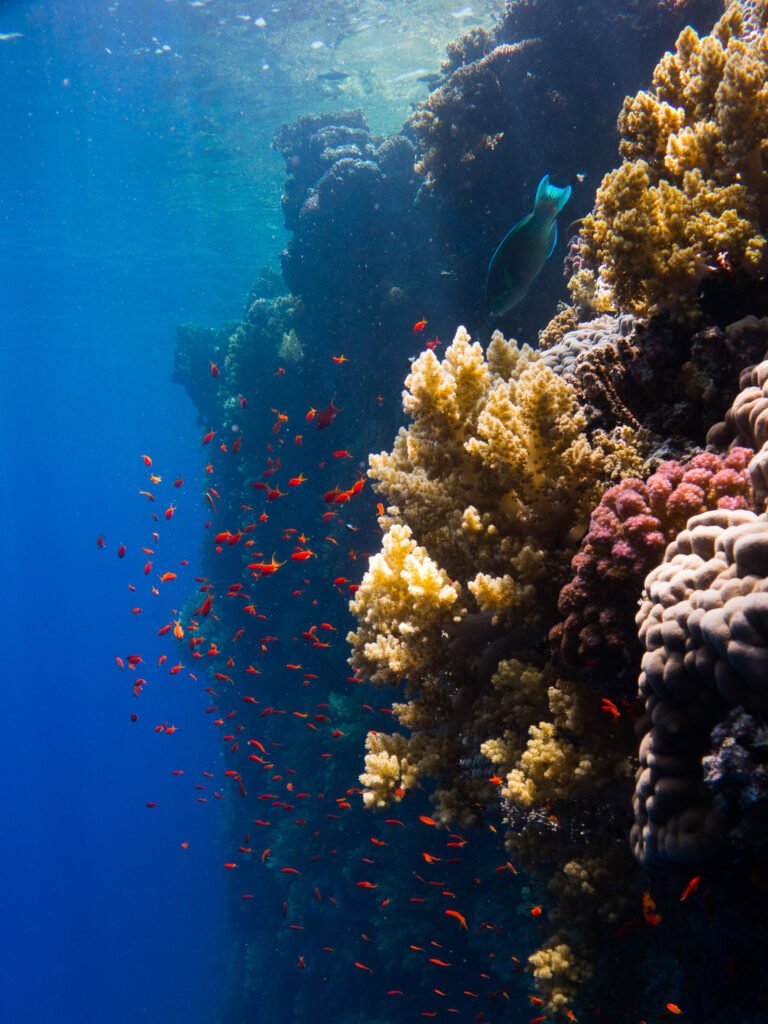
Elphinstone Reef is the name that puts Marsa Alam on the map for divers: a long, narrow reef a few miles offshore, rising from deep water with sheer walls and a plateau at each end. The soft coral is dense and bright, visibility is often 100 feet or more, and the north plateau is where oceanic whitetip sharks patrol in fall, sometimes right under the boats.
This is an advanced site: current, blue water on every side and nowhere to stand. Dive centers ask for an advanced certification and a reasonable number of logged dives, and they are right to. Newly certified divers have plenty on the house reefs and the inshore sites.
Further south, the Fury Shoals off Hamata hold caves, swim-throughs and hard coral gardens among the best preserved in the Red Sea. Check that your travel insurance actually covers diving; many standard policies exclude it.
| Site | How you reach it | Level | What you see |
|---|---|---|---|
| Elphinstone | Day boat, short crossing | Advanced | Walls, soft coral, oceanic whitetips in fall |
| Samadai (Dolphin House) | Day boat, about an hour | Snorkel and all divers | Spinner dolphins, lagoon reef |
| Sataya (Dolphin Reef) | Long day boat from Hamata | Snorkel and all divers | Larger pods, coral pinnacles |
| Abu Dabbab | From the beach | Snorkel and beginners | Green turtles, dugong, rays |
| Fury Shoals | Day boat or liveaboard | All divers | Caves, hard coral gardens |
House reefs straight off the beach
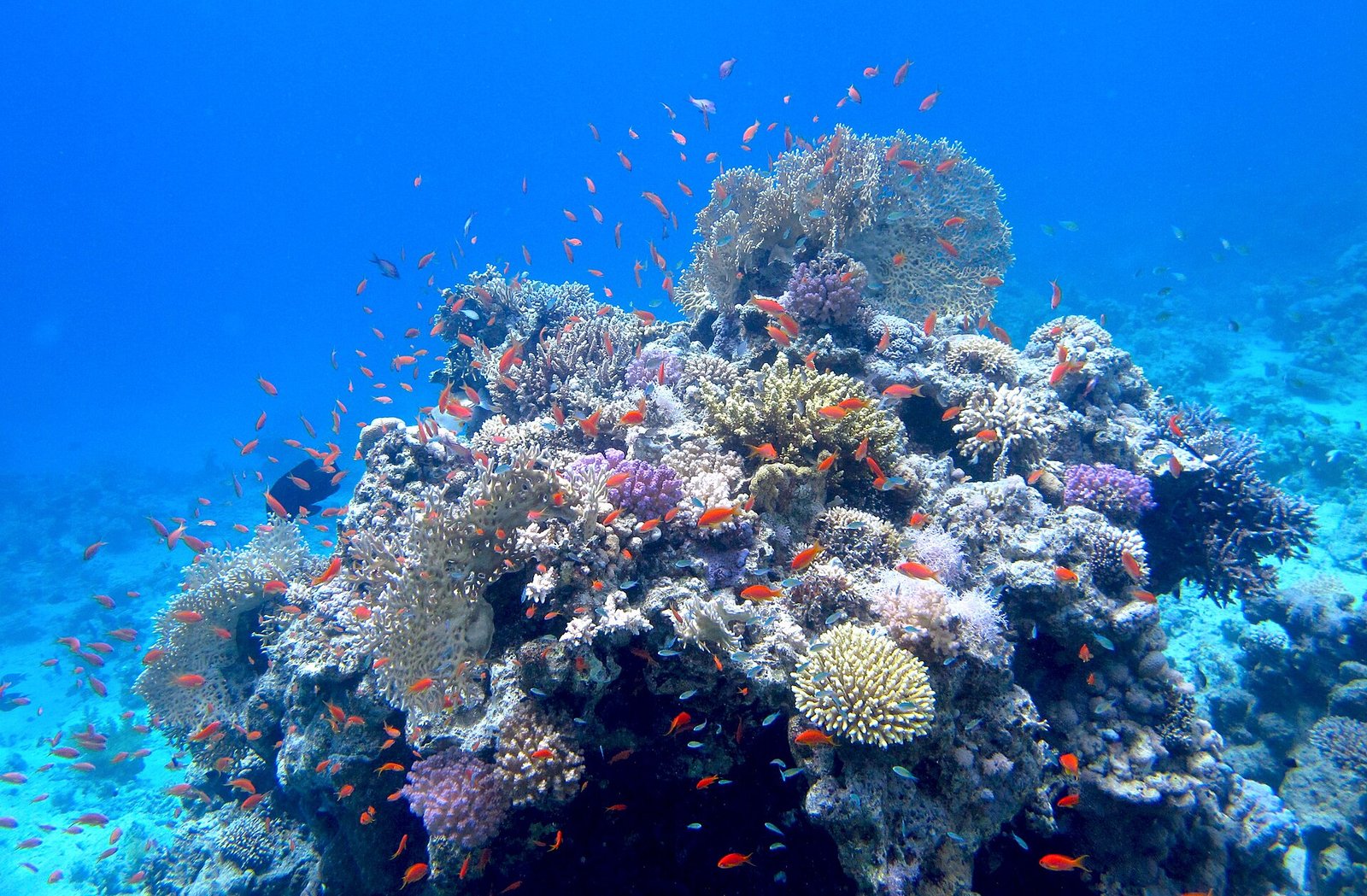
The everyday magic of Marsa Alam is not the famous sites but the fact that most resorts sit on a bay with living reef on both arms, so you are over coral within five minutes of leaving your towel. The usual layout is a sandy lagoon in the middle, a jetty or marked channel through the reef flat, and then the drop-off, where the wall falls away and the fish life starts.
For snorkelers this means going out before breakfast, at mid-morning and at sunset, with no boat, no schedule and no crowd. For divers it means unlimited shore dives on your own timetable, night dives, and the chance to learn one reef in detail over a week.
House reefs vary a lot; some are shallow and sandy and better for children, others drop to 100 feet off the jetty. Tell us who is traveling and we choose the bay first and the hotel second, because here the reef is the product.
Wadi el Gemal, Hamata and Sharm el Luli
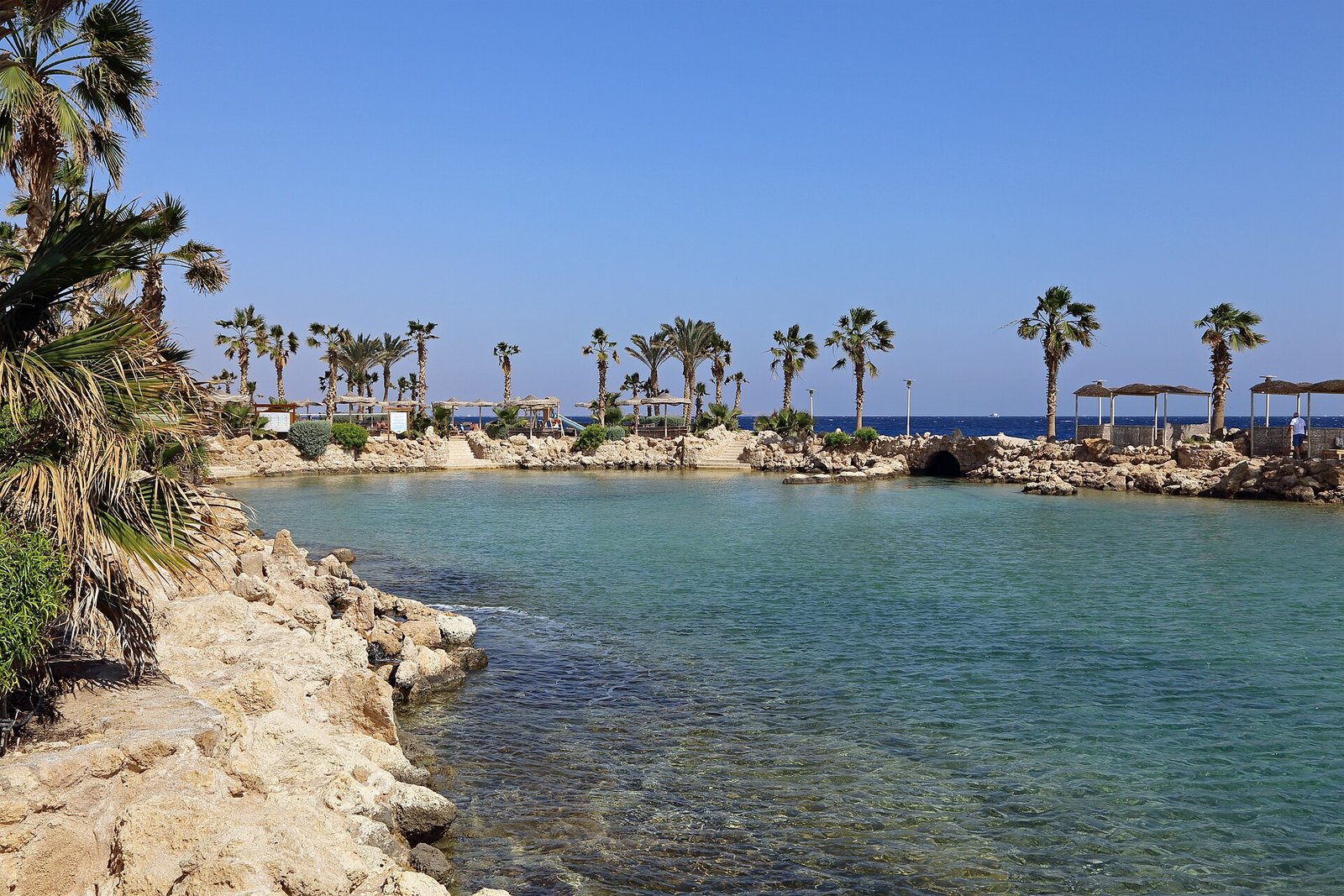
South of Marsa Alam town begins Wadi el Gemal National Park, one of the largest protected areas in Egypt and one that sees a tiny fraction of the region's visitors. It runs from the Eastern Desert mountains to the sea, taking in islands, mangroves and the valley of the camels that names it.
On the park's coast is Sharm el Luli, a bay of white sand and pale turquoise water that makes every list of Egypt's best beaches and is still just a beach with a ranger hut and a few umbrellas. Further south at Hamata and Qulaan, mangroves grow in the salt water, a rare Red Sea ecosystem sheltering juvenile reef fish and migrating birds, explored on foot at low tide or by kayak.
Inland, a 4x4 day takes you into the wadi: acacias shading the sand, gazelles early in the morning, and the ruins of the Roman emerald mines at Sikait, with small temples and miners' houses cut into a side valley. The Ababda people who live in the park run some of these trips themselves, with tea over a fire and a very different rhythm from a resort excursion. With a beach afternoon at Sharm el Luli, it is the best full day here that does not need a mask.
Getting there: the airport and the drive from Luxor or Aswan
Marsa Alam has its own airport at Port Ghalib, with a domestic hop from Cairo that runs on a limited schedule and is worth checking early. Most of our clients arrive by road, because they are coming from the Nile, not from Cairo.
From Luxor the drive crosses the Eastern Desert in around four to five hours, depending on where your resort sits. From Aswan it is similar, via the Edfu road that climbs out of the valley and drops to the coast. Both are dramatic drives through empty mountains in a private air-conditioned vehicle, with a tea stop and checkpoints handled by the driver. From Hurghada airport, allow three to four hours south along the coast.
Two warnings. A resort at the far south near Hamata adds an hour or more to every transfer. And a Luxor day trip from Marsa Alam means ten hours on the road for a few hours at the temples; do it as a transfer at the end of your Nile days instead. Our guide to domestic flights in Egypt covers the Cairo connection.
Best months to go, with the water temperature that matters
Marsa Alam works all year, but the sea and the wind decide the experience more than the air, so plan around water temperature, not just heat.
| Months | Air by day | Sea | Notes |
|---|---|---|---|
| December to February | 70 to 77 F (21 to 25 C) | 72 to 75 F (22 to 24 C) | Windy days, some boat days lost, thin wetsuit welcome, wonderfully quiet |
| March to May | 77 to 90 F (25 to 32 C) | 73 to 79 F (23 to 26 C) | Our favorite window, calm seas, migrating birds in the park |
| June to September | 95 to 105 F (35 to 41 C) | 82 to 86 F (28 to 30 C) | Hot ashore, glorious in the water, sharks at Elphinstone from late summer |
| October to November | 80 to 90 F (27 to 32 C) | 79 to 82 F (26 to 28 C) | Warm sea, settled weather, the best diving conditions of the year |
If you are pairing the coast with a Nile cruise, October, November, March and April give you comfortable temple days and a warm sea in the same week. Winter is excellent on the Nile and merely good on the coast; summer flips that, with the sea at its best and the temples punishing by noon.
Where to stay, by type rather than by name
We do not list resort names because standards change and the right choice depends on who you are. Think in categories.
- Large all-inclusive resorts on a bay. Several restaurants, pools, a kids' club, a dive center and a house reef. The safe choice for families and mixed groups, and the only category where a non-swimmer has enough to do.
- Dive-focused hotels and eco lodges. Smaller and simpler, built around a strong house reef and a serious dive operation with early boats. The right place if you plan two or three dives a day.
- Small camps near Hamata and the park. A handful of rooms or tents, kayaks, mangroves at the door and the Sataya boat nearby. Wonderful for silence and nature, wrong for anyone who wants a buffet.
- Port Ghalib hotels. Next to the airport and the marina promenade, restaurants outside the hotel, boats from the door. Most convenient, least wild.
Whatever the category, ask three questions: how far the drop-off is from the beach, whether there is a jetty through the reef flat, and how far the resort is from the airport. Those answers predict your week better than star counts. For the scene further north, see our guide to all-inclusive stays in Hurghada.
Marsa Alam or Hurghada: who each one suits
This is the question we get most, and the answer is not that one is better; they are different products that share a sea.
| Marsa Alam | Hurghada and El Gouna | |
|---|---|---|
| Reef condition | Excellent, low diver pressure | Good, busy at the popular sites |
| Big animals | Turtles, dugong, dolphins, oceanic sharks | Dolphins on day trips, reef fish, occasional turtles |
| Reef from the shore | Most resorts have a house reef | Mostly by boat |
| On land | Wadi el Gemal, Port Ghalib, little else | Marina, old town, restaurants, nightlife, golf |
| Non-divers in the group | Need a big resort or they get bored | Easy, plenty to do |
| Feel | Remote, quiet, nature first | Lively, developed, resort town |
The short version: if the trip is about the sea, Marsa Alam wins clearly. If the sea is one part of a varied vacation, or someone in the party does not swim much, Hurghada, El Gouna or Sahl Hasheesh will make more people happy; our guide to what to see in Hurghada sets out that side. If you are also weighing the Sinai, Dahab is the free-spirited cousin, with shore diving and a real town, but it does not join the Nile in one road transfer.
Pairing Marsa Alam with a Nile cruise, and how Explora Egipto builds it
The reason this coast suits an American itinerary is geography. A classic trip runs Cairo, a flight to Aswan or Luxor, then the Nile cruise between them. Whichever end the boat finishes, Marsa Alam is one desert drive away: temples in the morning, snorkeling by mid-afternoon, no backtracking.
Our usual shape is nine to twelve days: two or three in Cairo for the Pyramids and the museums, three or four nights on the Nile, then three to five nights on the coast, with a domestic flight back to Cairo at the end. Inside the coast block we place the Abu Dabbab morning, one dolphin day and a Wadi el Gemal day with Sharm el Luli, and leave the rest free for the house reef; divers swap one of those for Elphinstone.
What we handle: the private vehicle across the desert, the resort chosen for its reef and your group, boat days with operators who follow the dolphin rules, the guide for the park, and the flight home. We are a local agency in Egypt with our own vehicles and guides, every itinerary is built from scratch, and we send you the quote. See how a tailored trip works on our custom Egypt tour page.
Frequently asked questions
Is Marsa Alam worth visiting if I do not dive?
Yes, as long as you like being in the water with a mask. Abu Dabbab's turtles, the dolphin lagoons and every house reef are snorkel sites, and some of the best moments here happen in ten feet of water. If you do not want to swim at all, Hurghada or El Gouna give you more to do on land.
Can you really see a dugong at Abu Dabbab?
You can, and people do, from the surface with a snorkel over the seagrass. But it is a wild animal that comes and goes, and there are stretches of days with no sighting. Green turtles are close to guaranteed on any calm morning, so plan around them and treat the dugong as a gift.
How far is Marsa Alam from Luxor and Aswan?
Around four to five hours by private car from either city, across the Eastern Desert on a paved road with checkpoints and a tea stop. Resorts at the southern end near Hamata add an hour or more. It is a natural transfer at the end of a Nile cruise rather than a day trip, and we plan it that way.
When is the best time to go to Marsa Alam?
October and November for the warmest sea and the calmest boats, March and April for comfortable air and good conditions in the park. Summer is very hot on land but superb underwater. Winter is quiet and pleasant with cooler water and some wind, so bring or rent a thin wetsuit.
Is Elphinstone suitable for a newly certified diver?
No. Elphinstone is an offshore wall with current and open blue water on every side, and dive centers ask for advanced certification and a solid number of logged dives. A new diver has a wonderful week on the house reefs, the inshore sites and Samadai, and can come back for Elphinstone later.
Is there anything to do at night in Marsa Alam?
Very little, and that is the point for most people who choose it. Port Ghalib has a marina promenade with restaurants and cafes and is the one place that feels social after dark. Elsewhere your evening is the resort, the stars and an early night before the boat. If nightlife matters, choose Hurghada or El Gouna.
Finish the Nile with a week on the quietest reef in Egypt
Tell us your dates, who is traveling and whether anyone dives, and we come back with a full plan: Cairo, the cruise, the desert drive and the right bay in Marsa Alam, with Abu Dabbab, the dolphins and Wadi el Gemal in the right order. Just a quote that fits.